

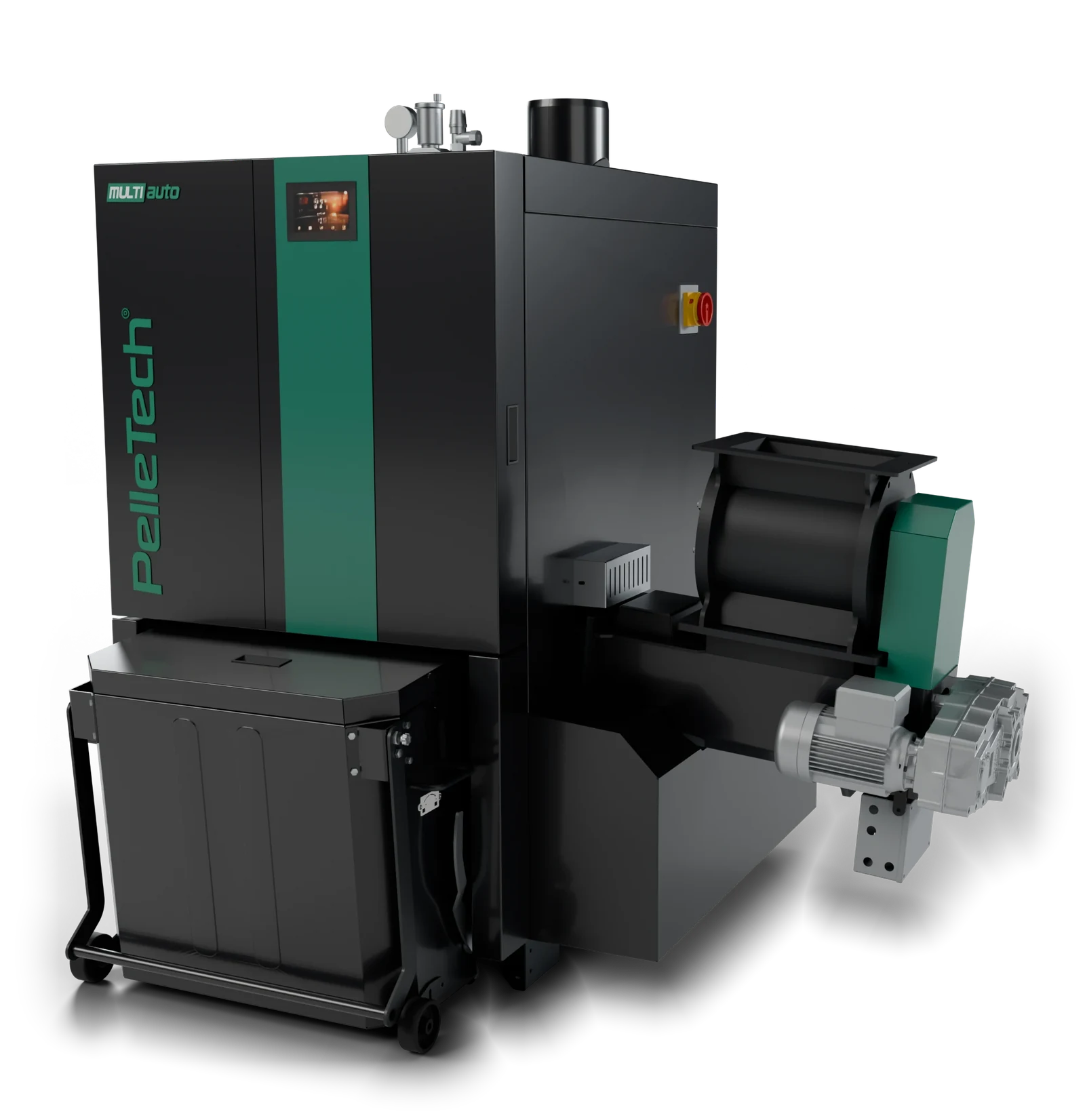
From the store to the radiators.
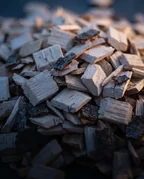
A wood chip plant is a chain: the fuel store, the feed system, the boiler, the accumulator tank and the heating system. Every link is built so that the chips arrive evenly and burn out completely.
- 01
The fuel store
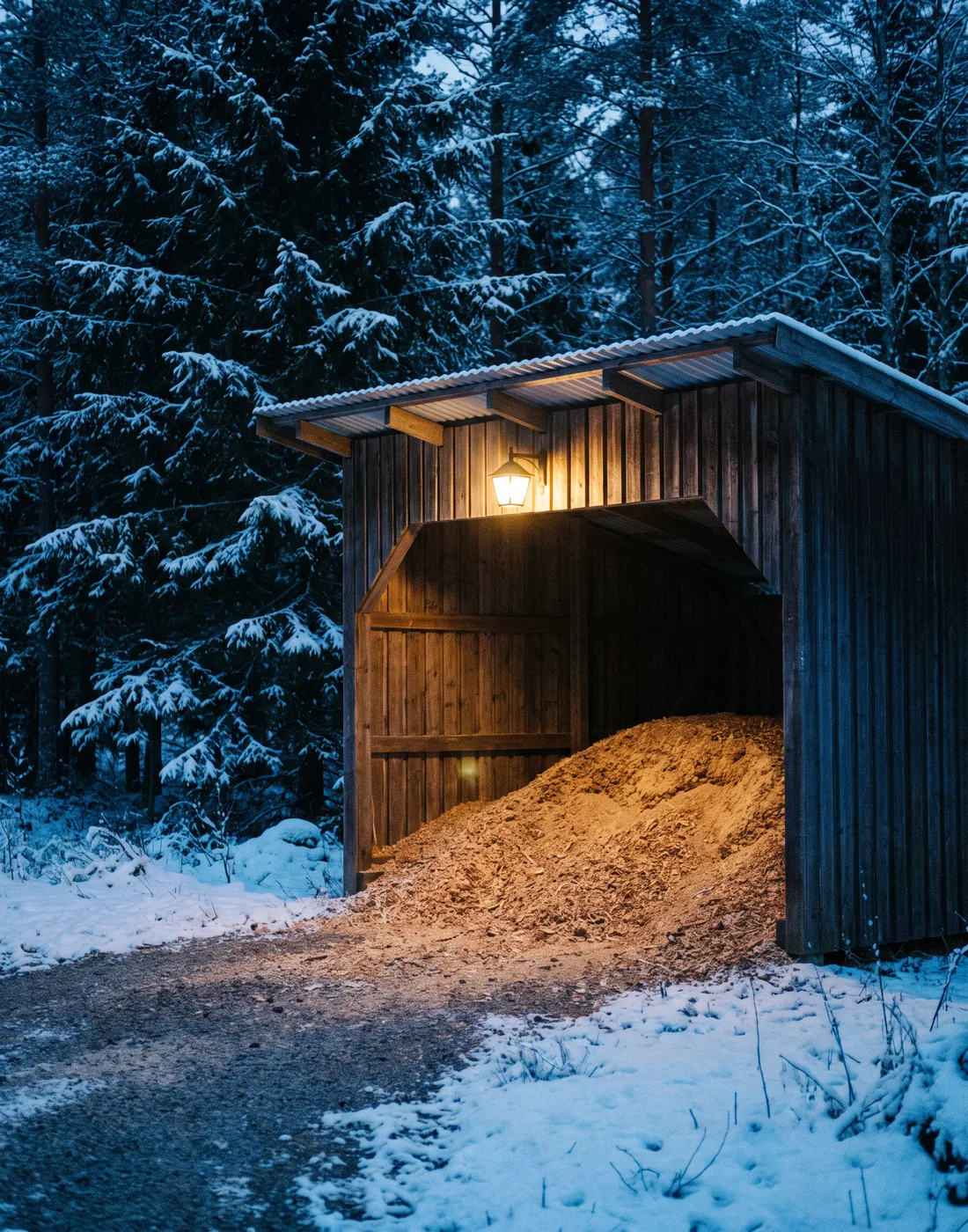
The chips lie in a store next to the boiler, for example one with a spring agitator that sweeps across the floor.
- 02
The feed system
A screw carries the chips to a sealed rotary valve, and the stoker screw carries them on into the boiler.
- 03
Combustion
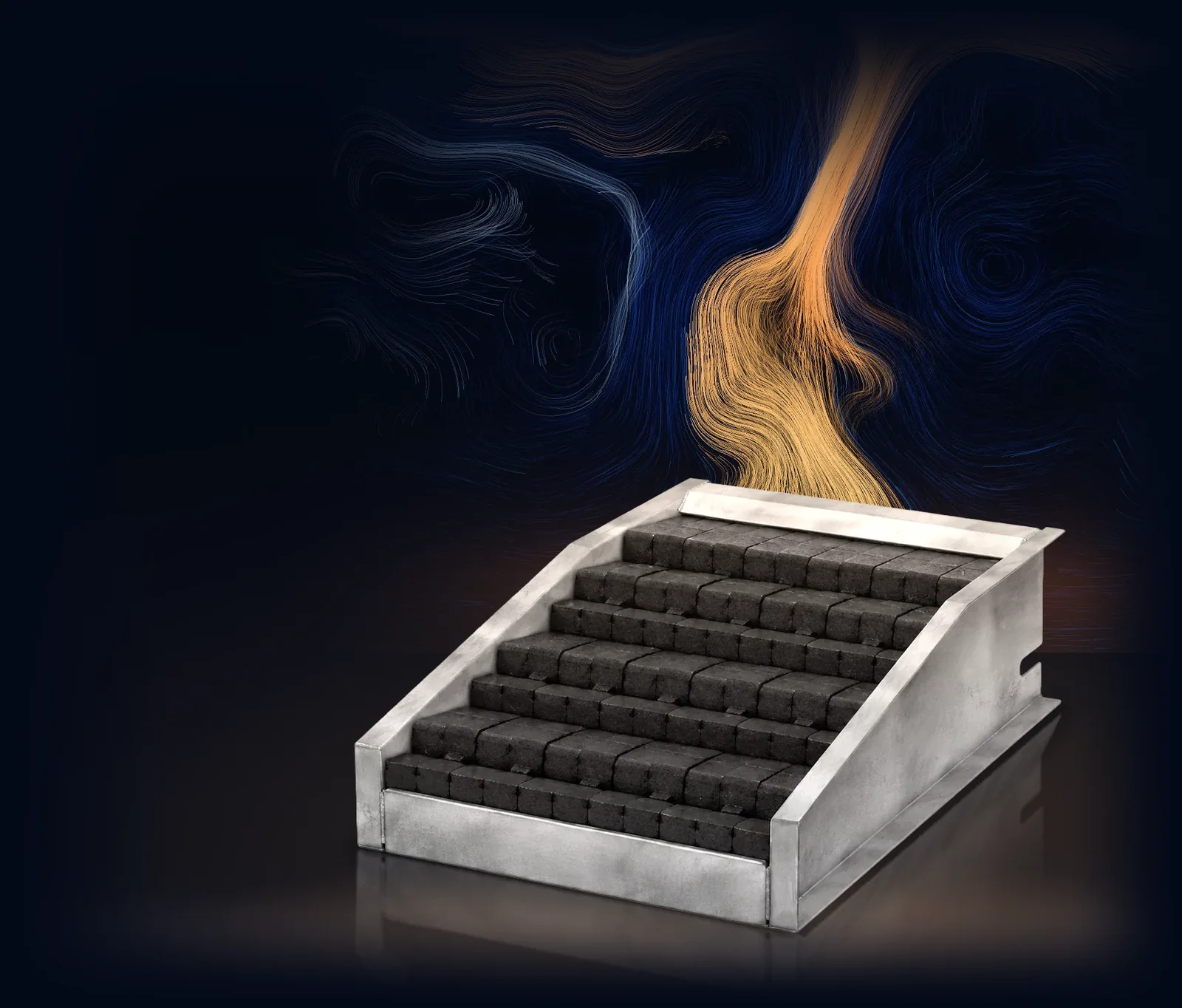
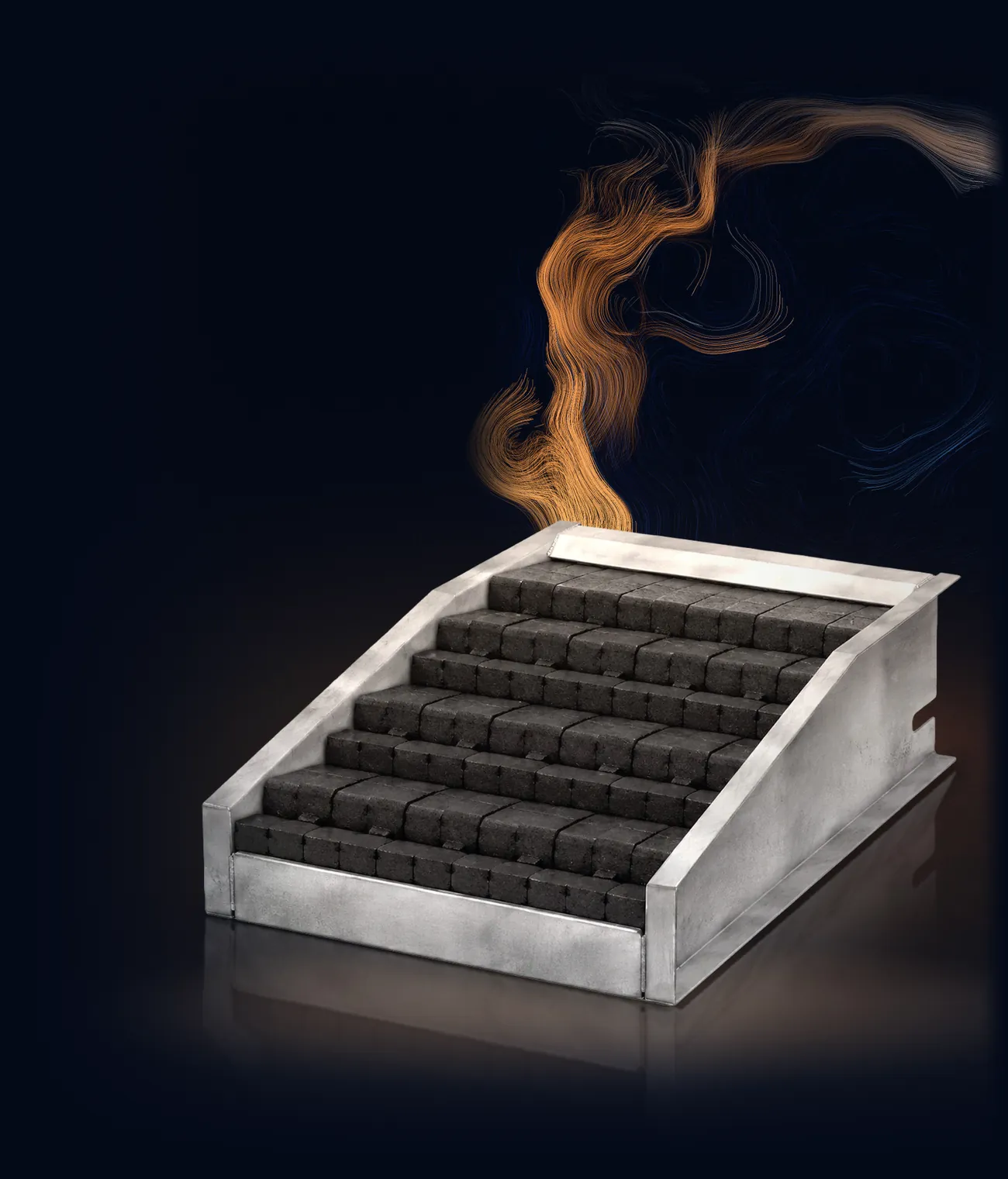
The chips ignite automatically and burn out on a moving stepped grate.
- 04
Heat exchange
The heat passes to the boiler water around the firebox and in the flue tubes.
- 05
The accumulator tank
The tank stores the heat and evens out operation between the boiler and the building.
- 06
Heat out
The heat goes to radiators, underfloor heating and hot water – in one building, or via buried pipework to several.
The feed system: screw, rotary valve and stoker.
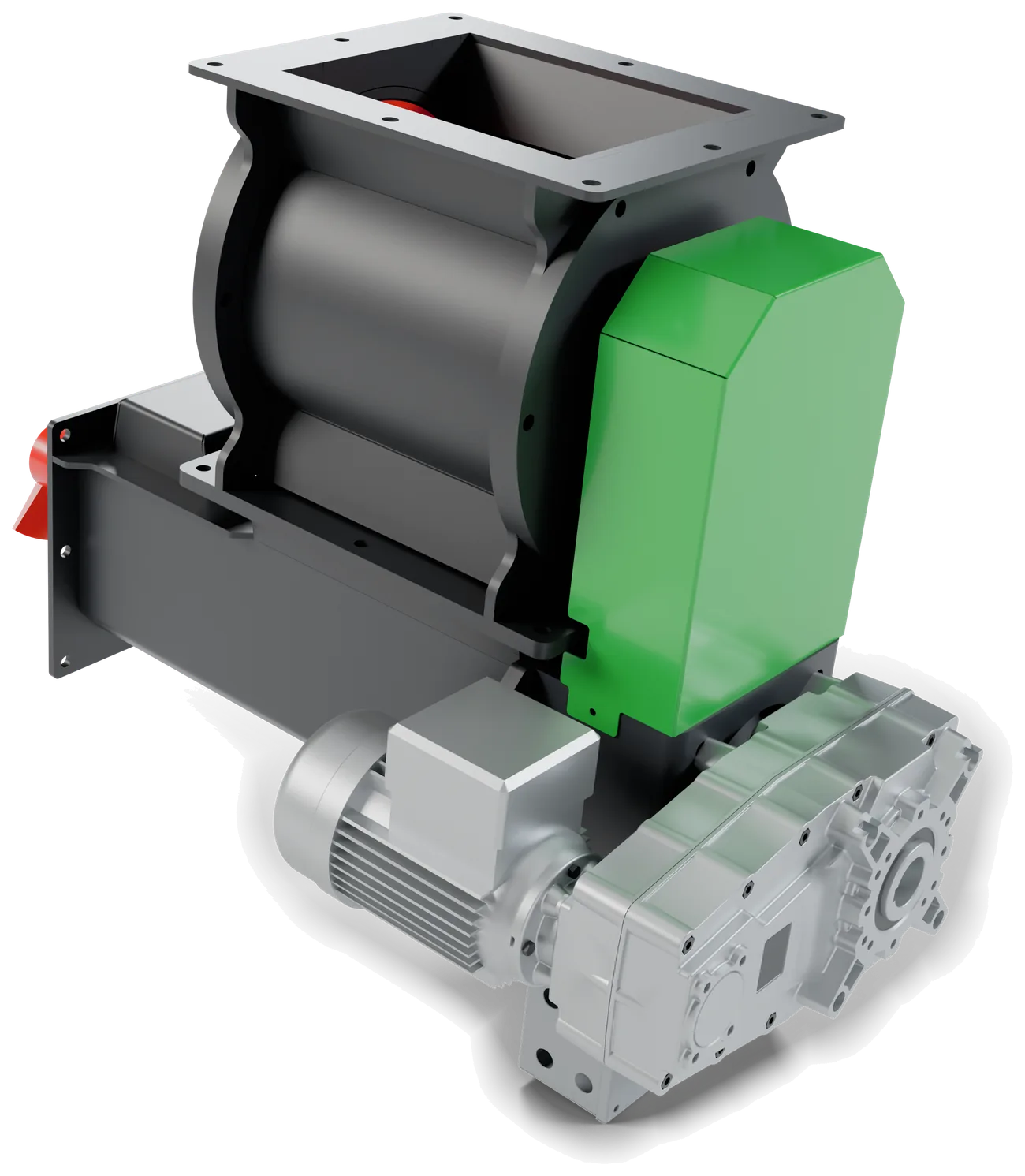
From the store, the chips are fed by screw to the rotary valve. The valve is fully sealed, so the fire can never travel back towards the store, and it cuts pieces that are too long – in Multiauto, all light material longer than 16 cm.
After the valve, the stoker screw takes over and feeds the chips into the burner. In Multiauto it is 100 or 150 mm, depending on the size of the boiler. A maintenance-free motor drives both the stoker screw and the rotary valve, so the two always work in sync.
Combustion: the grate and the firebox.
The chips are lit by a hot-air igniter – no firewood or kindling needed. They then burn out on a moving stepped grate, which carries the fuel forward and breaks up the bed as it burns. That is why the boiler can burn wetter and dirtier chips, and it never has to stop for cleaning.
The firebox in Multiauto is built of refractory material with silicon carbide and withstands approx. 1,500 °C. A lambda sensor measures the oxygen in the flue gases and adjusts air and fuel continuously, so that combustion stays clean even when the quality of the chips varies.
The heat passes into the water.
The boiler body consists of the firebox and the convection section, both surrounded by the boiler water. The hot gases pass through flue tubes, where turbulators move up and down and keep the tubes clean. The cleaner the tubes, the more of the heat ends up in the water.
From the boiler, the water goes to the accumulator tank. The boiler charges the tank and stops when it is full, and the building draws its heat from the tank. That means longer run times and fewer starts and stops.
- Efficiency, Multiauto
- Up to 94 %
- Firebox withstands
- approx. 1,500 °C
- Accumulator tank
- 20–30 litres per kW
The ash and the controls.
The ash is discharged automatically. In Multiauto, an ash screw carries the ash from both the burner and the convection section to an ash box of 26–38 or 70 litres, which is removable and easy to empty. In the larger boilers, the ash screws can carry the ash all the way out of the boiler room, to a shared container.
The boiler is controlled from a touchscreen, where you see the output, schedule and fuel type. With the app or the web interface, you can monitor and control it remotely and receive alarms straight to your phone. If more output is needed, up to four boilers can be connected in cascade.
Which wood chip boiler fits?
The principle is the same in all our wood chip boilers. What differs is the output and where the boiler is to stand.
- PelleTech Multiauto · 20–200 kW
- For properties, farms and smaller industry. Four boilers in cascade give up to 800 kW.
- PelleTech IDRO · 200 kW–4.6 MW
- Industrial boiler for wood chips, pellets and residues. Four IDRO 1,150 in cascade give 4.6 MW.
- PelleTech BU · 200 kW–2.2 MW
- Wood chip burner that connects to an existing industrial boiler, when the boiler is to stay.