


FAQ
Questionsand answers.
What customers usually ask us – short answers in six topics. Search, or pick a topic.
27 questions in 6 topicsRather talk to us? +46 (0)921-578 00 · Weekdays 08.00–17.00
Fuels.
6 questions
Wood chip heating
What should we consider when choosing a wood chip boiler?
Start with three things: a reliable boiler, a supplier who provides documentation and support after delivery, and well-planned fuel logistics – how the wood chips are delivered, stored and fed to the boiler. Think about ventilation in the fuel store, too. Sizes, what drives the cost and how installation works are covered on the page about wood chip boilers.
Link to the answerHow wet can the wood chips be?
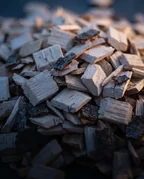
The PelleTech boilers handle wood chips with up to 40 % moisture content – for Multiauto 30–40 % depending on the fuel. The wetter the chips, the lower the output and the higher the consumption.
For really wet fuels there is our own Biotherm burner, which handles horse manure with up to 60 % moisture content.
- The PelleTech boilers
- up to 40 %
- The Biotherm burner
- up to 60 %
How coarse can the wood chips be?
The boilers are designed for wood chips in sizes P16S and P31S (G50+). Coarser chips also work, with larger screws. We decide that together with you.
Link to the answerPellets
What should we consider when choosing a pellet boiler?
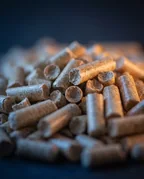
The same as for wood chips: a reliable, high-quality boiler and a supplier who provides support. Pellets are an even, dry fuel that is easy to automate.
Also choose how the pellets are to be stored: in small bags, big bags or a bulk store. Our silos hold 11–185 m³, and a vacuum system can collect the pellets from a store some distance away.
- Storage
- small bags, big bags, bulk
- Silos
- 11–185 m³
Horse manure and slaughterhouse waste
Can horse manure be burned?
Yes. We have over 20 years' experience of horse manure, and our own Biotherm burner was developed together with Luleå University of Technology. It is available in 250–1,000 kW and handles horse manure with up to 60 % moisture content – the moisture content is controlled by mixing in wood chips.
The manure becomes heat on site, instead of being stored and taken to landfill.
- Output
- 250–1,000 kW
- Moisture content
- up to 60 %
- Experience
- over 20 years
Can you burn slaughterhouse waste?
Yes. The Biotherm burner burns slaughterhouse waste and other residues where they arise, so the waste does not need to be stored, transported away or sent to landfill. First the Shredder breaks up the waste, then it is burned.
The burner can be fitted with a hot-water boiler, a high-temperature boiler or a steam boiler.
- Output
- 250–1,000 kW
- Boiler
- hot water, high-temperature water or steam
- Landfill
- not needed
The plant.
7 questions
Prefabricated heating plant
Why choose a prefabricated heating plant?
It saves time. The plant is built in a standard container or custom-built for the site, and delivered with insulated pipes and labelled components – so less work remains on site.
We build heating plants of 200 kW–2 MW.
Link to the answerWhat is included, and who installs the plant on site?
The plant comes with documentation, commissioning and training. We can do the on-site installation, or local plumbing and electrical contractors can – you choose.
Link to the answerAccumulator tank
How big an accumulator tank do we need?
Allow roughly 20–30 litres per kW of boiler output. A 100 kW boiler therefore needs a tank of around 2,000–3,000 litres.
Our accumulator tanks range from 300 to 20,000 litres.
- Rule of thumb
- 20–30 l per kW
- 100 kW boiler
- 2,000–3,000 l
Why is an accumulator tank needed?
It gives the boiler longer running times and fewer starts and stops. The boiler charges the tank and stops when it is full, and the tank evens out the output.
Link to the answerBoilers and fuel stores
Are there hot-air heaters?
Yes. PelleTech AERO heats the air directly and is available from 60 kW to over 8 MW. It has a moving stepped grate and burns pellets or wood chips.
- PelleTech AERO
- 60 kW – 8+ MW
Do we need a supporting floor in the wood chip store?
No, it is not necessary – the spring agitators are stable. But a supporting floor gives a cleaner store and makes it possible to dry the wood chips with ventilation.
Link to the answerHow big a fuel store do we need?
It depends on the boiler output and how often you want to refill. A rule of thumb: a 100 kW boiler uses roughly 200 m³ of wood chips a year.
Spring agitators are available up to 180 m³ and scraper-floor stores up to 500 m³. The agitators can be loaded with at least 5 metres of wood chips in height, and the diameter is up to 4 metres for the small ones and 6 metres for the largest.
- Spring agitator
- up to 180 m³
- Scraper-floor store
- up to 500 m³
- Agitator diameter
- up to 6 m
Installation and maintenance.
4 questions
Is it difficult to install a wood chip boiler?
No. The boiler is delivered complete, test-run and adjusted.
Link to the answerHow is the plant protected against burn-back?
With two safeguards: a sprinkler, which is required in Sweden, and a sealed rotary valve in the feed system between the fuel store and the boiler.
Link to the answerWho installs the plant?
We do – everything from the mechanical installation to the whole project as a turnkey contract. You can also have local plumbing and electrical contractors install it.
Link to the answerHow much maintenance is needed?
The plants are fully automatic, with automatic ignition, feeding, cleaning and ash handling. You top up the fuel and empty the ash. A major service is needed a couple of times a year, ideally through a service agreement.
Link to the answerEngineering and service.
5 questions
Can you help with the design and engineering?
Yes. We do the calculations and draw the plant in 3D, and at commissioning you receive documented training.
Link to the answerDo we get drawings?
Yes. The boiler room is drawn in 3D and 2D, with plumbing and electrical drawings.
Link to the answerHow much output do we need?
We work that out in a heat-load calculation, and it is free of charge. Tell us what needs heating and we will get back to you.
Link to the answerDo you offer service?
Yes, throughout Sweden – on both our own plants and other makes.
Link to the answerCan you take care of buried pipework, chimneys and substations?
Yes. We can take on the whole project as a turnkey contractor, together with our network of suppliers – or just the parts you want.
Link to the answerEconomics.
3 questions
Is it profitable to burn wood chips?
Yes, and we have tools to calculate the payback period for your particular plant. With your own forest, the heat costs around SEK 0.15–0.20/kWh, with bought-in wood chips somewhat more – approx. SEK 0.30/kWh.
- Own forest
- SEK 0.15–0.20/kWh
- Bought-in wood chips
- approx. SEK 0.30/kWh
Prices from 2023.
Link to the answerWhat does the heat cost?
With bought-in wood chips approx. SEK 0.30/kWh, with your own forest SEK 0.15–0.20/kWh. Today's plants are built for several biofuels, so you can burn whatever is cheapest and easiest to obtain.
Link to the answerHow much fuel is used?
A rule of thumb: wood chips in cubic metres per year are roughly twice the boiler output in kW – up to three times with poorer chips. For pellets, divide the wood chip volume by 3.9.
A 100 kW boiler therefore uses around 200 m³ of wood chips or 51 m³ of pellets a year.
- Wood chips, m³ per year
- ≈ 2 × kW
- Pellets, m³ per year
- chips ÷ 3.9
- 100 kW boiler
- ≈ 200 m³ of chips
Other.
2 questions
Why a moving stepped grate?
It gives better combustion and handles poorer and wetter fuels. The same technology is used in industrial boilers.
Link to the answerHow coarse a material can the feed system handle?
From 38 kW, a 150 mm stoker screw is used, which handles wood chips in size G50+. The industrial boilers have feed screws of up to 180 mm.
- Stoker screw, from 38 kW
- 150 mm
- Feed screw, industrial
- up to 180 mm
No questions match .
Try another word, or ask us directly: +46 (0)921-578 00 or info@biothermheat.com.
Help
Didn't findthe answer?
Ask us directly, read more in the Knowledge base – or let us do the calculations for your plant.