

What does a kilowatt hour cost?
With wood chips, the fuel cost comes to a few tenths of a krona per kilowatt hour – and even less with your own forest.
- Bought-in wood chips
- approx. SEK 0.30/kWh
- Wood chips from your own forest
- SEK 0.15–0.20/kWh
- Efficiency, Multiauto
- Up to 94 %
Approximate prices as of 2023, based on the fuel.
A worked example.
Say a property or farm needs 100,000 kWh of heat a year. The fuel for that heat then costs roughly:
| Fuel | Price | Per year, approx. |
|---|---|---|
| Bought-in wood chips | approx. SEK 0.30/kWh | approx. SEK 30,000 |
| Wood chips from your own forest | SEK 0.15–0.20/kWh | SEK 15,000–20,000 |
Compare this with what the same amount of heat costs you today, and you can see what switching fuel gives you each year. The boiler does not capture quite all the energy in the fuel – which is why we always calculate with your boiler, your wood chips and your heating demand in the heat-load calculation.
What affects the cost.
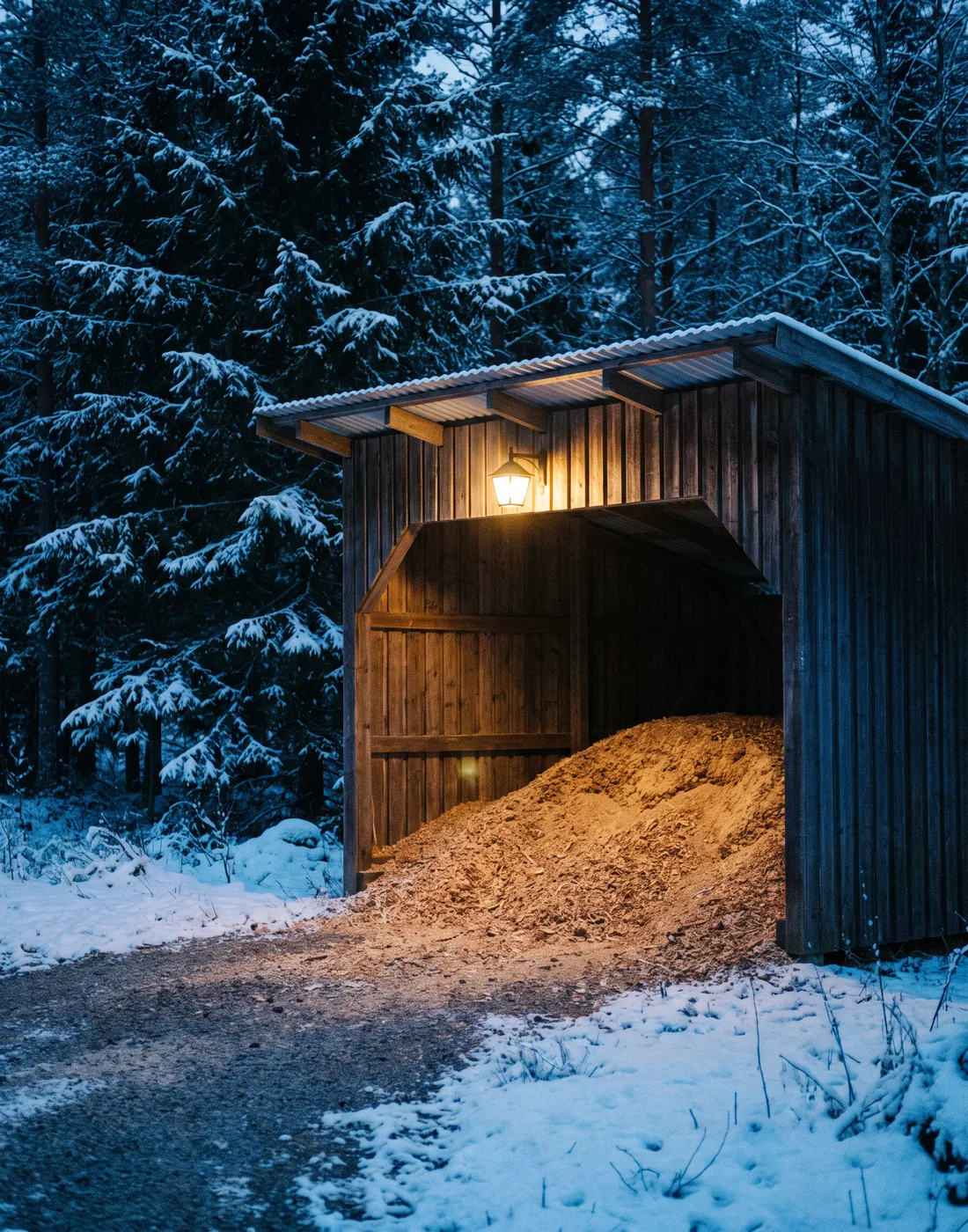
- Where the wood chips come from. Your own forest gives the cheapest heat. Bought-in chips cost somewhat more.
- The moisture content of the chips. Wetter wood chips mean lower output and higher consumption. Dry chips under a roof give more heat.
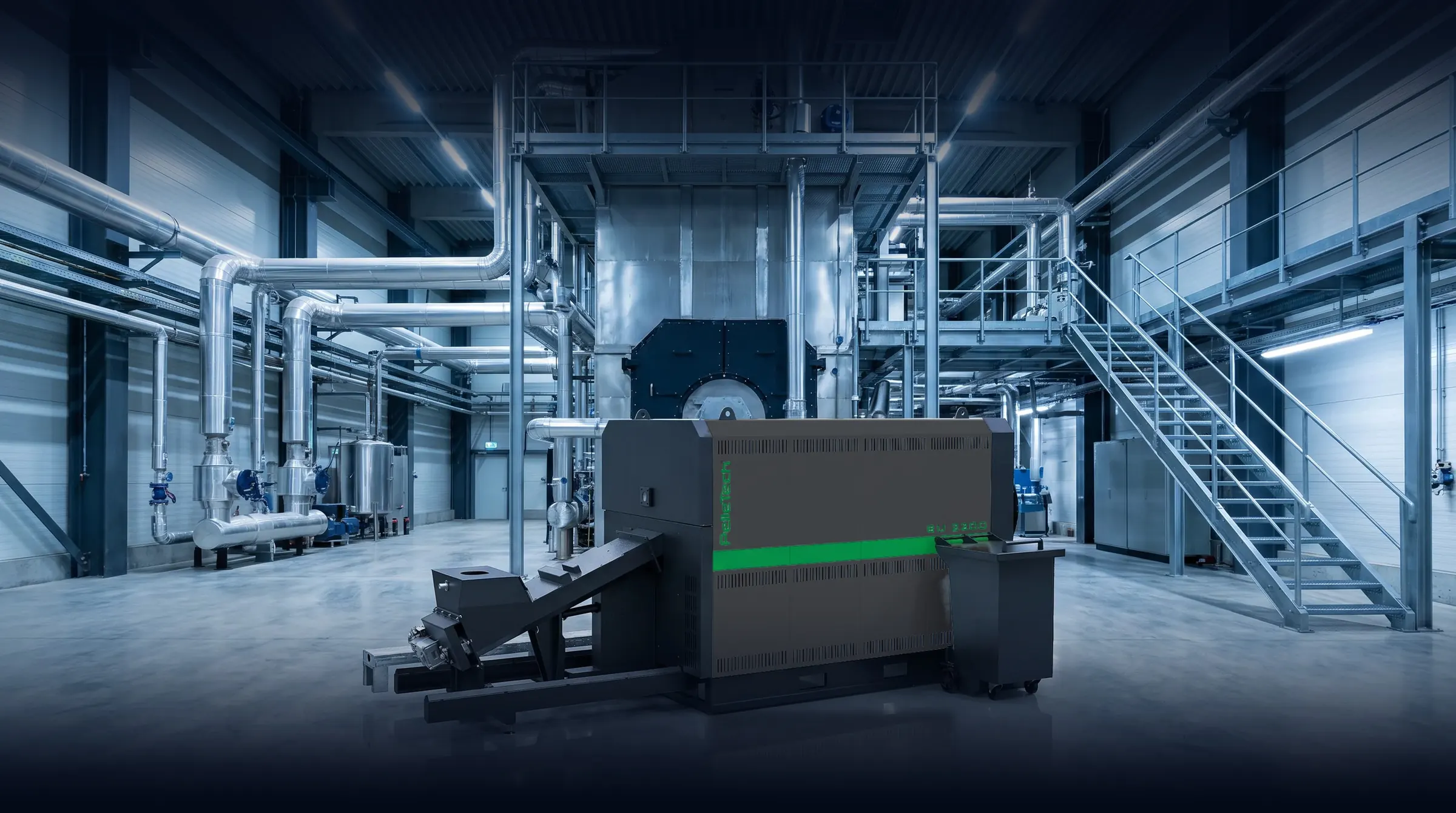
- The boiler's efficiency. A lambda sensor, a moving grate and tubes that are kept clean mean that more of the fuel becomes heat.
- The accumulator tank. Longer run times and fewer starts and stops give more even combustion.
- Servicing. A boiler that is serviced once or twice a year keeps its efficiency.
Several fuels, one plant.
Today's plants are built for several biofuels. You can burn whatever is cheapest and easiest to get hold of – an electric boiler or a heat pump can only run on electricity. Bioenergy also gives you greater control over your energy costs.
The investment and the payback.
What the plant itself costs is calculated case by case, because it depends on the whole plant and not just the boiler: the output, the fuel store, the accumulator tank, where the boiler will stand and how much of the installation you want us to do.
It is worth looking at the life-cycle cost – the cost over the entire lifetime – and not just the purchase price. We have tools that calculate the payback period for your particular plant.